

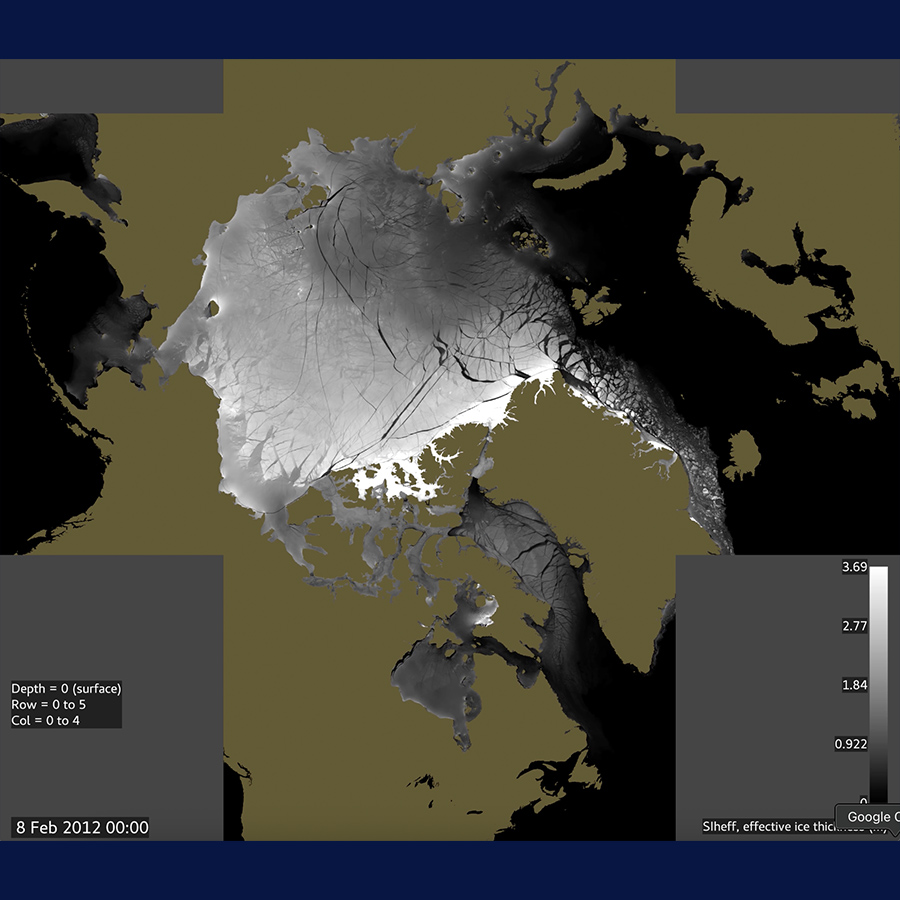
A unique feature of the polar seas is sea ice! Sea ice is frozen seawater that floats on the ocean surface. It melts in the summer and refreezes in the winter. As these ice crystals form at the ocean surface, they expel salt and can increase the salinity (and density) of underlying seawater. In some areas, the cold, extra-salty water is dense enough to influence deep ocean circulation which, over the long term, impacts climate (Learn more about salinity and sea ice!). Another climate impact of sea ice? Its white color can reflect a large portion of incoming sunlight, helping to keep polar regions cold.
Polar sea ice provides important habitat for polar ecosystems. The ice itself is habitat for animals in both polar regions such as arctic foxes, polar bears, and penguins. Ecosystems not only thrive on top of the ice, but under it too! Algae growing on the underside of sea ice provides a rich food source for the marine food web, sustaining populations of seals, penguins, whales, and other larger marine creatures.
A unique feature of the polar seas is sea ice! Sea ice is frozen seawater that floats on the ocean surface. It melts in the summer and refreezes in the winter. As these ice crystals form at the ocean surface, they expel salt and can increase the salinity (and density) of underlying seawater. In some areas, the cold, extra-salty water is dense enough to influence deep ocean circulation which, over the long term, impacts climate (Learn more about salinity and sea ice!). Another climate impact of sea ice? Its white color can reflect a large portion of incoming sunlight, helping to keep polar regions cold.
Polar sea ice provides important habitat for polar ecosystems. The ice itself is habitat for animals in both polar regions such as arctic foxes, polar bears, and penguins. Ecosystems not only thrive on top of the ice, but under it too! Algae growing on the underside of sea ice provides a rich food source for the marine food web, sustaining populations of seals, penguins, whales, and other larger marine creatures.
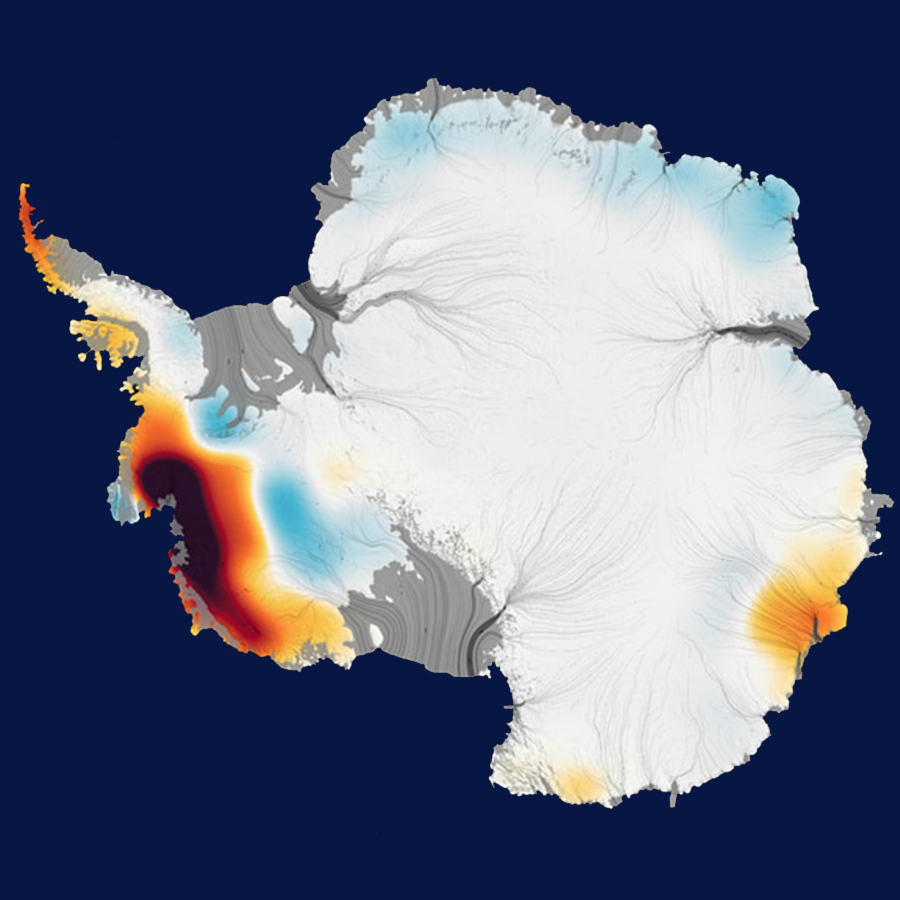
Check out these recent results!
NASA Salinity | NASA Winds | ECCO | NASA PACE